


At Heathens Metal Works, we believe metalworking is about more than shaping steel. It is about transformation, craftsmanship, and the enduring relationship between humanity and the elements.
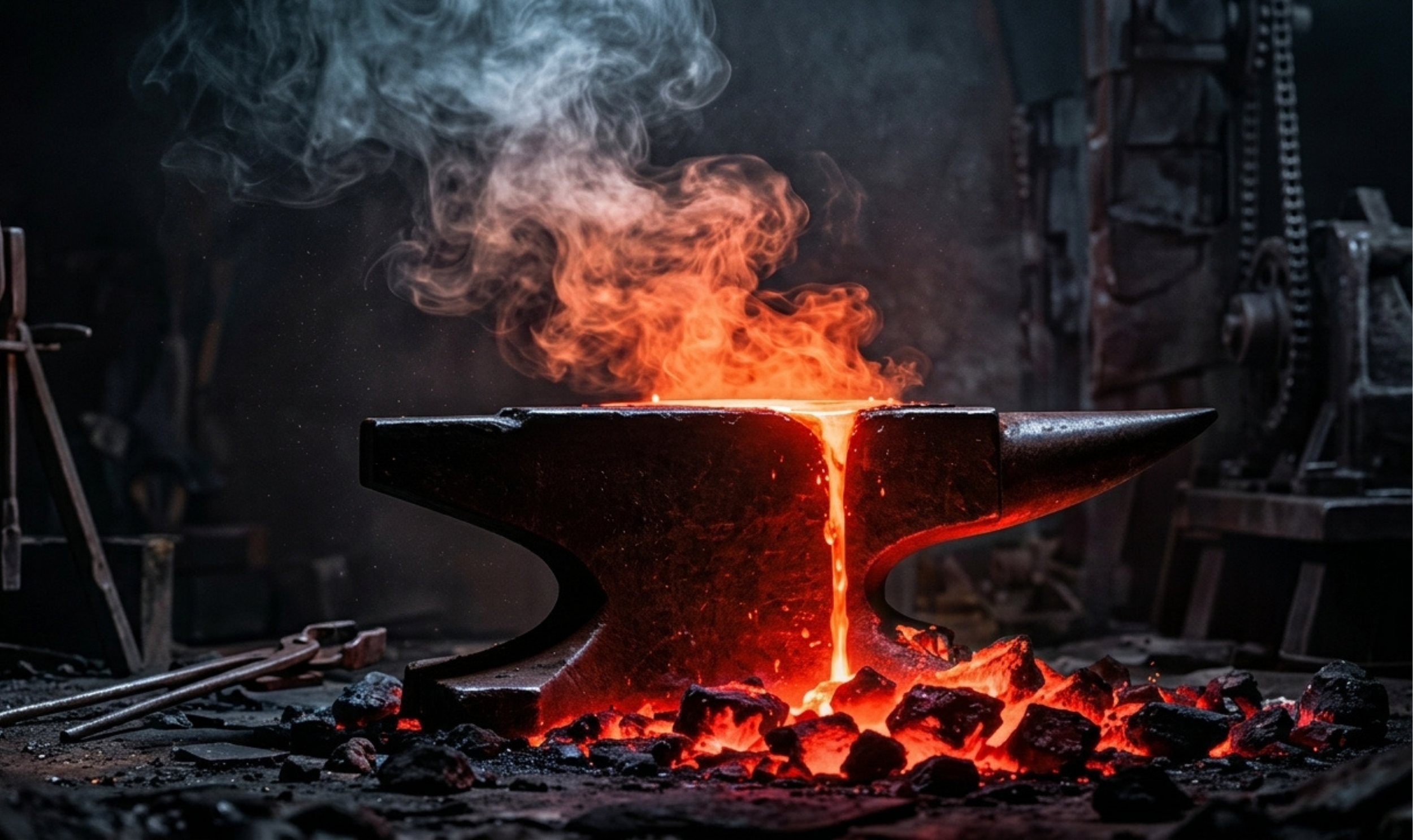
The forge has always occupied a unique place in human history—part workshop, part gathering place, and, in folklore, a domain bordering on the supernatural. But to understand the craft, it helps to understand the name.
Coming Soon
Spears & Knives Collection
"Ordinary metal transformed into extraordinary utility."
Drawing inspiration from historical metallurgy and Norse folklore, our blades and spearheads are forged with intention. We honor ancient pattern-welding and high-carbon techniques to deliver functional, legendary steel.
Norse Arm Bands & Jewelry
"Forged with intent, built for the oath-keeper."
In Heathen tradition, arm bands were symbols of loyalty, lineage, and personal honor. Each piece is hand-hammered using ancestral techniques, carrying the tradition of the black metal into the modern age.
The Blacksmith
The word smith comes from an old Germanic root associated with skilled craftsmanship and working metal. It describes someone who shapes raw material through knowledge, patience, and repeated effort.
The word blacksmith is commonly associated with dark iron oxide—known as fire scale—that forms on iron as it is heated and worked. It also distinguishes ironworking from the working of lighter-colored metals, historically called "white metals."
There is something wonderfully fitting about that distinction: the blacksmith works in darkness and heat, taking something raw and transforming it into something enduring.
Between Craft & Folklore
Long before the industrial revolution, blacksmiths were essential members of their communities. They made the tools that built homes, worked fields, repaired equipment, and forged the weapons and jewelry people depended upon.
In many European traditions, smiths were associated with magic, mystery, and supernatural knowledge. Their work involved forces that most people could neither control nor fully understand:
Fire softened the iron.
The Hammer gave it shape.
Water transformed its structure.
Through knowledge of these forces, the smith performed a kind of alchemy. To someone watching raw iron emerge from a roaring fire transformed into a blade or an arm band, the process seemed nothing short of magical. The boundary between craftsmanship, science, and folklore was seamlessly blurred.
The Forge: A Place Between Worlds
In folklore, the blacksmith was viewed as a liminal figure—someone standing directly on the boundary between the familiar human world and the supernatural underworld.
The forge itself was an atmospheric realm: dark, loud, smoky, and illuminated by a roaring fire. It was a place where earth, fire, air, and water met through human hands—a literal doorway to the subterranean world where ancient wights, dwarves, and spirits lived.
Standing guard at that doorway was the blacksmith: someone who held secrets ordinary people did not, capable of working with the mysterious forces of the natural world.
The Magic & Metallurgy of the Forge
The lore goes far beyond the fire and hammer. Stories tell of enchanted forge water, protective horseshoes, curses worked through the anvil, and clever smiths who outwitted the supernatural.
Legacy & Ancestry: Traditions held that wisdom travelled through bloodlines. A smith whose ancestors were also smiths up to seven generations possessed natural healing gifts. It was believed that, just by the touch of a hand, a smith was capable of healing the sick.
Spirit in the Steel: It was believed that extraordinary power lived within the metal itself. It is said that the strength, spirit or qualities of an animal or ancestor could be carried into a forged creation.
The Protective Horseshoe: Saint Dunstan—the 10th-century blacksmith who shod the Devil’s hoof with a red-hot shoe and bound him never to enter a home protected by a horseshoe.
THE FOUR ELEMENTS
At the heart of the craft are four fundamental elements:
Earth — The raw materials drawn from the world around us.
Fire — The force that makes transformation possible.
Air — The breath that feeds the flame and sustains the forge.
Water — The element that cools, changes and completes the process.
Together, they form the foundation of the blacksmith's craft.
But there is a fifth element: the maker. The knowledge, patience, imagination and intention that turn raw material into something meaningful.
THE MODERN HEATHEN
We draw inspiration from history, folklore, and the enduring traditions of craftsmanship. Norse mythology, historical metalworking, and the stories surrounding the forge all feed our creative spirit. We honor the old ways without being bound by them, respecting the craft while exploring where it can take us.
Forged in Fire. Inspired by Legend. Built for the Modern Heathen.
An independent maker within the Inner Panda Collective.